Mold From a Burst Pipe: How Homeowners Insurance Responds

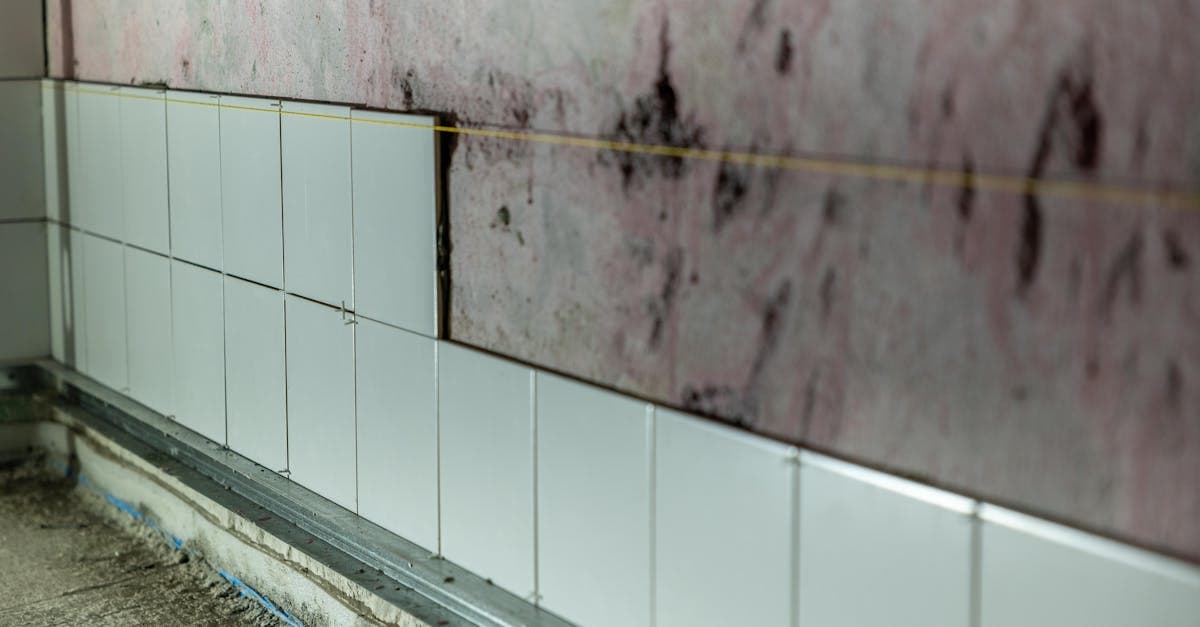
As a consumer, you should know that mold coverage in homeowners insurance has been deliberately restricted by the insurance industry to limit their financial exposure. This is not a criticism — insurers responded rationally to a surge in costly mold claims. But the result is that homeowners bear significantly more mold risk than most realize.
Your standard homeowners policy is the dehumidifier in your coverage system that keeps mold-related claims from condensing into denied expenses and unprotected losses, but its mold protection has clear boundaries. Most policies limit mold coverage to situations where mold results from a sudden, covered peril and cap payouts at a fraction of your overall coverage limit. Some policies exclude mold almost entirely, requiring a separate endorsement for any mold coverage at all.
The consumer's challenge is twofold. First, you need to understand what your specific policy covers regarding mold — not what you assume it covers, but what the actual policy language says. Second, you need to evaluate whether your current mold protection is adequate for your home's risk factors and supplement it if necessary.
Mold endorsements that increase your coverage limits are available from most insurers for relatively modest premiums. Whether you need one depends on your home's age, your climate, your plumbing condition, and your financial ability to absorb mold remediation costs out of pocket. This guide helps you evaluate all of these factors.
How Homeowners Insurance Handles Mold Coverage
But does this hold up under scrutiny? Mold coverage in homeowners insurance is the dehumidifier in your coverage system that keeps mold-related claims from condensing into denied expenses and unprotected losses. It exists, but within carefully defined boundaries that every homeowner must understand before a claim situation arises.
The cause-based coverage model: Your homeowners policy does not cover mold as an independent peril. Instead, mold is covered only when it results from a peril your policy already covers. If a covered event — such as a burst pipe, appliance failure, or wind-driven rain through storm damage — causes water damage that leads to mold growth, the resulting mold remediation is typically covered up to your policy's mold sublimit.
What triggers coverage: The most common covered mold scenarios involve sudden water events: burst supply lines, failed water heaters, accidental appliance overflows, and storm damage that allows water intrusion. In each case, the underlying water event is sudden, accidental, and covered by the policy — which extends coverage to the mold that follows.
What remains excluded: Mold from gradual moisture, persistent humidity, condensation, poor ventilation, deferred maintenance, and flooding is excluded. These sources of mold are considered preventable through proper home maintenance, and insurers classify them outside the scope of covered perils.
Sublimits apply: Even when mold is covered, most policies impose a sublimit — a maximum payout for mold-related costs that is far below your overall coverage limit. Common sublimits range from $5,000 to $10,000, though some policies offer higher limits or allow endorsement increases.
Mold Endorsements: Adding More Protection to Your Policy
The claim is worth questioning. If your standard homeowners policy provides limited mold coverage, a mold endorsement can increase your protection significantly. Evaluating whether this endorsement makes sense is forecasting every moisture scenario so mold never catches your coverage unprepared and your finances unprotected.
What mold endorsements provide: A mold endorsement typically raises your mold sublimit from the standard $5,000 to $10,000 range to $25,000, $50,000, or even $100,000 depending on the insurer. Some endorsements also broaden the covered causes of mold, though most maintain the same cause-based coverage restrictions as the base policy.
Endorsement costs: Mold endorsements typically add $50 to $200 per year to your homeowners premium, depending on the coverage amount, your location, and your insurer. In high-humidity states, endorsement costs may be higher due to elevated mold claim frequency. Even at the higher end, the cost is modest relative to the potential remediation expenses.
Who should consider a mold endorsement: Homeowners in humid climates, homes with older plumbing systems, properties with known moisture issues, and homes with finished basements or crawl spaces face elevated mold risk. If your standard mold sublimit is $5,000 or less, the endorsement becomes particularly important because even a moderate mold event can exceed that cap.
Endorsement limitations: Mold endorsements increase your payout cap but typically do not change the underlying coverage rules. The mold must still result from a covered peril to trigger the endorsement. Gradual moisture, flood-related mold, and maintenance-related mold remain excluded regardless of your endorsement amount.
Shopping for endorsements: Not all mold endorsements are equal. Compare coverage amounts, covered perils, deductible requirements, and whether the endorsement covers testing and assessment costs in addition to remediation. Ask your agent to provide the endorsement language so you can review it before purchasing.
Sudden vs Gradual Mold: The Critical Coverage Distinction
The claim is worth questioning. The single most important factor in mold coverage is whether the underlying moisture was sudden or gradual. This distinction determines whether your claim is approved or denied, and understanding it prevents the most common source of mold claim frustration.
Sudden events that trigger coverage: A pipe that bursts without warning, a water heater that fails catastrophically, a washing machine hose that ruptures during a cycle, storm damage that creates an opening for rain, or an accidental overflow from a tub or sink. These events share a common characteristic — they are unexpected, unpreventable, and occur at a specific moment in time.
Gradual conditions that exclude coverage: A pipe fitting that drips slowly for months, condensation accumulating in a poorly ventilated space, a slow roof leak that worsens over multiple rain events, moisture wicking through a foundation crack over time, or humidity buildup from inadequate ventilation. These conditions develop over days, weeks, or months — and your policy excludes the mold they produce.
The gray area: Some mold situations fall between clearly sudden and clearly gradual. A pipe joint that loosened gradually but finally failed suddenly. A roof patch that held for months before giving way during a storm. These cases are where coverage disputes arise, and documentation of the failure timeline becomes critical to your claim.
Insurer investigation: When you file a mold claim, the adjuster's primary investigation focuses on determining whether the moisture source was sudden or gradual. They inspect the water damage pattern, evaluate corrosion or deterioration evidence, and assess the timeline. Prepare for this investigation by documenting everything you know about when and how the moisture problem began.
Mold After Flooding: The Coverage Gap
But does this hold up under scrutiny? One of the most significant mold coverage gaps affects homeowners who experience flooding. Standard homeowners insurance excludes flood damage, and this exclusion extends to mold that results from flooding — creating a double coverage problem.
The flood exclusion and mold: When floodwater enters your home and mold develops from the moisture, your standard homeowners policy denies the mold claim because the underlying cause — flooding — is an excluded peril. This applies to all types of flooding: storm surge, rising water, overflowing rivers, and surface runoff.
NFIP flood insurance and mold: The National Flood Insurance Program covers certain flood-related costs but has limited mold provisions. NFIP policies may cover mold remediation that is necessary to repair covered flood damage, but they do not provide standalone mold coverage. The coverage for mold under NFIP is narrow and often insufficient for severe post-flood mold infestations.
Private flood insurance and mold: Some private flood insurance policies offer broader mold coverage than NFIP policies. If you are purchasing flood insurance in a mold-prone area, comparing mold provisions between NFIP and private options is worthwhile.
Post-flood mold prevention: The best protection against post-flood mold is rapid drying and remediation after floodwater recedes. FEMA guidelines recommend beginning drying within 24 to 48 hours of water receding. Materials that cannot be dried quickly — carpet, padding, insulation, and drywall below the flood line — should be removed promptly to prevent mold colonization.
The financial reality: Homeowners who experience flooding often face both flood repair costs and mold remediation costs with limited insurance for either. This double exposure makes flood insurance, including policies with mold provisions, particularly important for homeowners in flood-prone areas.
Mold and Your Home's Value: Long-Term Financial Impact
The claim is worth questioning. Mold damage can affect your home's market value, your insurance history, and your ability to sell — creating financial consequences that extend well beyond the remediation cost.
Impact on home value: Homes with current mold problems see significant value reductions. Even homes with past mold issues that were professionally remediated may face buyer skepticism. The stigma of mold can reduce offers by 10 to 25 percent depending on the severity and the local market.
Disclosure requirements: Most states require sellers to disclose known material defects, including mold history. Past mold claims may appear on your CLUE report, which prospective buyers' insurers may review. Failing to disclose known mold history can result in legal liability after the sale.
CLUE report impact: Mold claims remain on your Comprehensive Loss Underwriting Exchange report for seven years. This history is visible to insurers when you apply for new coverage. Multiple mold claims or severe mold history can make obtaining affordable homeowners insurance difficult.
Insurance history consequences: Filing a mold claim can increase your premiums, trigger non-renewal at your next policy anniversary, or affect your insurability with other carriers. These consequences last for years and can cost more than the mold claim itself in increased premiums.
Strategic considerations: Before filing a small mold claim — particularly one near your sublimit — weigh the remediation cost against the long-term insurance consequences. For a $3,000 mold remediation on a policy with a $5,000 sublimit and a $1,000 deductible, the insurance payout is only $2,000 — but the claim may cost you more than $2,000 in future premium increases.
Mold Coverage Limits and Sublimits Explained
But does this hold up under scrutiny? Even when mold is covered under your homeowners policy, the amount your insurer will pay is typically far below your overall policy limits. Mold sublimits represent the persistent humidity that feeds mold growth silently behind your walls while your policy's exclusions grow just as quietly around it that many homeowners do not discover until filing a claim.
How sublimits work: A sublimit is a maximum payout for a specific type of claim that is lower than your overall policy limit. If your homeowners policy has $300,000 in dwelling coverage but a $10,000 mold sublimit, the most your insurer will pay for mold remediation is $10,000 — regardless of the actual remediation cost.
Common sublimit amounts: Most standard homeowners policies sublimit mold at $5,000 to $10,000. Some policies set the sublimit even lower — $1,000 to $3,000 — particularly in high-humidity states where mold claims are most frequent. A few policies provide no mold coverage at all without a separate endorsement.
What the sublimit covers: The mold sublimit typically applies to all mold-related costs from a single event: testing, remediation, disposal, and repairs to materials damaged by the mold itself. Some policies count these costs against your overall dwelling coverage with the sublimit as the mold-specific cap. Others treat the sublimit as entirely separate from your main coverage.
Sublimit adequacy: Professional mold remediation for a moderate infestation typically costs $5,000 to $15,000. Severe cases involving multiple rooms, HVAC systems, or structural remediation can exceed $30,000. A $5,000 or even $10,000 sublimit covers only a fraction of these costs, leaving the homeowner responsible for the remainder.
Increasing your sublimit: Mold endorsements that raise your sublimit are available from most insurers. These endorsements typically increase your mold coverage to $25,000 or $50,000 for an annual premium of $50 to $200. For homeowners in high-risk climates, this endorsement is one of the most cost-effective coverage improvements available.
Quick Takeaways on Mold and Homeowners Insurance
If you remember nothing else from this guide, remember these five points:
One: Homeowners insurance covers mold only when it results from a sudden, covered event. Gradual moisture, humidity, flooding, and maintenance neglect are excluded.
Two: Even when covered, mold payouts are capped by sublimits — usually $5,000 to $10,000 — far below typical remediation costs for serious infestations.
Three: Mold endorsements that increase your sublimit cost $50 to $200 per year and are strongly recommended for homeowners in humid climates or older homes.
Four: Mold begins growing within 24 to 48 hours of water exposure. Prompt drying after any water event is your most effective mold prevention tool and claim protection strategy.
Five: Document everything — the moisture source, the mold growth, the timeline, and your mitigation efforts. Documentation quality directly determines claim outcomes.
These principles protect your home, your coverage, and your finances in every mold scenario.
Continue reading

How to Read an Insurance Quote Like a Professional
Insurance quotes contain dense information that most consumers skim past. Learning to read every section of a quote — from coverage summaries to endorsement schedules — reveals the true quality of each offer.

Policy Checkup After Buying a Home: Getting Your Coverage Right
Homeownership brings dwelling coverage, personal property protection, liability limits, and flood risk questions. A thorough policy checkup when you buy a home prevents costly coverage mistakes.

Why Insurance Companies Oppose Assignment of Benefits Agreements
Insurers argue that AOB drives up claim costs, encourages litigation, and inflates repair bills. Understanding the insurer perspective helps you evaluate whether an AOB serves your interests.