How Property Damage Liability Claims Work in Florida

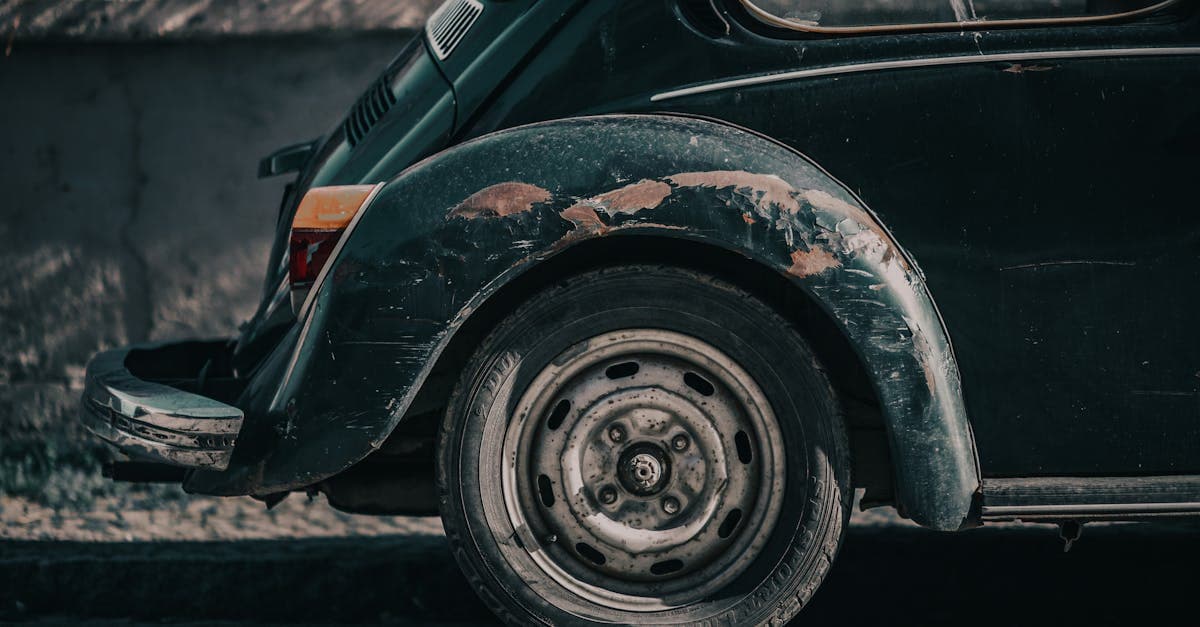
Insurance companies in Florida are not required to tell you that the state minimum PDL coverage is probably insufficient for your needs. They will happily sell you a $10,000 PDL policy that meets the legal requirement, even though any single accident involving a moderately priced vehicle will exceed that limit.
Florida PDL coverage is the storm shelter that protects your bank account when your driving causes a property damage downpour. It protects your finances by paying for property damage you cause in an at-fault accident — but only up to your chosen limit. The state minimum of $10,000 was designed as a bare-minimum legal requirement, not as a recommendation for adequate protection.
As a consumer, your job is to evaluate your actual exposure. Look at the vehicles around you on Florida roads. Count the luxury SUVs, the new pickup trucks, and the Tesla sedans. Each one represents a potential property damage claim that could exceed $10,000 with a single impact. Then consider what happens to your savings, your assets, and your financial future if you are personally liable for the amount above your PDL limit.
The informed approach is to carry enough PDL coverage to protect your assets from a realistic worst-case accident scenario. For most Florida drivers, that means carrying at least $50,000 in PDL coverage and considering $100,000 or more if you have significant assets. The premium increase is modest. The financial protection is substantial. This guide gives you the framework to make that decision confidently.
Florida PDL Stacking Rules and Multi-Vehicle Policies
But does this hold up under scrutiny? Florida drivers with multiple vehicles on a single policy sometimes assume their PDL limits stack — that two vehicles with $10,000 PDL each provide $20,000 in coverage. This assumption is incorrect and understanding the actual rules prevents dangerous miscalculations.
PDL does not stack in Florida: Unlike some coverages such as Uninsured Motorist, PDL limits do not stack across multiple vehicles on the same policy. If you have three vehicles each with $10,000 PDL, your available coverage for any single accident is still $10,000 — not $30,000. The limit applies per accident, not per vehicle.
Why stacking does not apply: PDL is a liability coverage that follows the driver and the accident, not the vehicle. When you cause an accident, only one vehicle is involved — the one you were driving. The coverage on your other vehicles is irrelevant to that specific accident because those vehicles were not involved.
The practical impact: Families who carry minimum PDL on multiple vehicles are no better protected than families with minimum PDL on a single vehicle. Each vehicle independently carries the same inadequate limit, and no accident scenario allows them to combine.
What you can do instead: Rather than relying on stacking, increase your PDL limit to a single adequate level. This higher limit applies regardless of which vehicle you are driving. The premium increase for higher PDL on multiple vehicles is modest because the insurer knows only one vehicle can be involved in any single accident.
Umbrella policies as an alternative: For families with multiple vehicles and significant assets, a personal umbrella policy provides additional liability coverage above the auto PDL limit. Umbrella policies typically require minimum underlying PDL limits and provide $1 million or more in additional protection.
How Fault Determination Affects Florida PDL Claims
The claim is worth questioning. Florida uses a modified comparative negligence system for property damage claims, which means fault is not always an all-or-nothing determination. Understanding how fault affects your PDL claim helps you navigate the process and manage your financial exposure.
Pure comparative negligence for property damage: Florida applies comparative negligence to property damage claims, meaning each party's fault percentage determines their share of responsibility. If you are 70 percent at fault in an accident that causes $20,000 in property damage, your PDL is responsible for $14,000 of that total.
Fault investigation process: After an accident, both insurers investigate to determine fault percentages. They review the police report, driver statements, witness accounts, physical evidence, and any available camera footage. The investigation may assign fault entirely to one driver or split it between both parties.
How disputed fault affects your claim: If fault is disputed, the claims process takes longer. Your insurer defends your interests by arguing for a lower fault percentage, which reduces your PDL payout. If the dispute cannot be resolved through the claims process, it may proceed to arbitration or litigation.
The impact of traffic citations: A traffic citation issued at the accident scene does not automatically determine insurance fault, but it strongly influences the investigation. A citation for running a red light, failing to yield, or following too closely supports a finding of fault against the cited driver.
Protecting yourself during the investigation: Cooperate fully with your insurer's investigation. Provide truthful statements and all documentation. Do not admit fault at the accident scene — let the insurers and investigators determine fault based on evidence. Your cooperation with your own insurer is required by your policy terms.
What Florida PDL Does Not Cover
The claim is worth questioning. Despite covering a wide range of property, Florida PDL has important exclusions that every driver must understand. Assuming PDL covers something it does not leads to denied claims and personal financial exposure.
Your own vehicle: PDL pays for damage to other people's property — never your own. If you cause an accident and your vehicle is damaged, you need collision coverage to pay for your repairs. Florida does not require collision coverage, so many drivers are unprotected on this front.
Bodily injuries: PDL covers property damage only. If you injure someone in an accident, PDL does not pay their medical bills, lost wages, or pain and suffering. Florida's no-fault PIP system handles some injury costs, but serious injuries may require Bodily Injury Liability coverage, which Florida does not mandate.
Your own injuries: Your personal injuries in an at-fault accident are not PDL's responsibility. Your PIP coverage handles up to $10,000 in medical expenses, and your health insurance covers the rest. PDL is exclusively about other people's property.
Intentional damage: If you deliberately damage someone's property with your vehicle, PDL does not cover the claim. Intentional acts are excluded from liability coverage, and the act itself may constitute a criminal offense.
Wear and tear or pre-existing damage: PDL pays for damage your accident caused — not damage that existed before the accident. If the other driver's vehicle already had a dented bumper, PDL does not pay to fix the pre-existing dent, only the new damage from your collision.
Florida PDL and Multi-Vehicle Accidents
But does this hold up under scrutiny? Multi-vehicle accidents create some of the most challenging PDL coverage situations in Florida. Understanding how your single PDL limit applies across multiple damaged vehicles and properties is critical for assessing your true exposure.
Single limit, multiple claims: Your Florida PDL limit is a per-accident total — not a per-vehicle or per-property limit. If you cause a chain-reaction accident that damages three vehicles, your PDL limit is split among all three claims. A $10,000 limit divided among three damaged vehicles provides barely $3,333 each.
How insurers allocate the limit: When claims from a single accident exceed your PDL limit, your insurer typically distributes the available funds proportionally based on each claim's size. If one vehicle has $15,000 in damage and another has $5,000, and your limit is $10,000, the first vehicle receives approximately $7,500 and the second receives $2,500.
Chain reaction liability: In Florida, the driver who initiated the chain reaction is typically responsible for all resulting property damage. If you rear-end one vehicle and push it into a third, your PDL covers both the vehicle you hit and the vehicle pushed forward. This compounding effect makes adequate PDL limits essential.
Intersection multi-vehicle scenarios: Running a red light or failing to yield can cause multi-vehicle accidents where your single PDL limit must cover extensive damage. A T-bone collision that pushes the struck vehicle into oncoming traffic can produce total property damage of $50,000 or more across multiple vehicles.
Personal exposure in multi-vehicle accidents: The mathematical reality of multi-vehicle accidents is the strongest argument for carrying PDL limits well above the Florida minimum. A three-car accident with moderate damage to each vehicle can easily produce $30,000 to $45,000 in total property damage — three to four times the minimum limit.
Florida PDL and the Uninsured Driver Problem
The claim is worth questioning. Florida has one of the highest uninsured driver rates in the nation, and this reality represents the financial tornado that touches down the instant you are found at fault for damaging another person's property for every insured driver on the road. Understanding how uninsured drivers affect your PDL coverage and your overall protection is essential.
Florida's uninsured driver rate: Estimates suggest that nearly 20 percent of Florida drivers are uninsured, meaning roughly one in five vehicles on the road carries no insurance at all. This rate is among the highest in the country and significantly affects the risk environment for all Florida drivers.
When an uninsured driver hits you: If an uninsured driver damages your property, their lack of PDL means you have no third-party coverage to claim against. Your options are limited to filing a collision claim with your own insurer and paying your deductible, or pursuing the uninsured driver personally — which often yields nothing.
Uninsured Motorist Property Damage coverage: Florida offers optional Uninsured Motorist Property Damage coverage that pays for damage to your vehicle when the at-fault driver has no insurance. This coverage is not required but is strongly recommended given Florida's high uninsured driver rate. It fills a critical gap that PDL alone cannot address.
How uninsured drivers affect PDL costs: The high rate of uninsured drivers in Florida increases costs for insured drivers. Insurers factor uninsured driver risk into premium calculations, and the claims that result from uninsured driver accidents are ultimately absorbed by the insured population through higher rates.
The enforcement gap: Florida suspended its requirement to show proof of insurance at vehicle registration checkpoints, relying instead on random insurance verification and accident-based enforcement. This approach has contributed to the high uninsured rate and the ongoing risk it creates for insured drivers.
Florida's $10,000 PDL Minimum and Why It Falls Short
But does this hold up under scrutiny? Florida requires every registered vehicle to carry at least $10,000 in Property Damage Liability coverage. This minimum represents the financial tornado that touches down the instant you are found at fault for damaging another person's property — a coverage floor that has not kept pace with the reality of modern vehicle costs.
How the minimum was set: Florida established its PDL minimum when the average vehicle cost a fraction of today's prices. At the time, $10,000 covered most property damage claims comfortably. Decades of vehicle price inflation have eroded that coverage to the point where it covers barely half of an average property damage claim.
Average claim costs today: The Insurance Information Institute reports average property damage claims exceeding $13,000 nationally. In Florida, where luxury vehicles and expensive commercial traffic are common, typical claims frequently surpass $15,000 to $20,000. A $10,000 limit leaves the at-fault driver exposed for the balance.
Modern vehicle repair costs: Even a moderate rear-end collision involving a vehicle with sensors, cameras, and adaptive cruise control components can produce a repair bill of $8,000 to $15,000. A bumper replacement on a vehicle with parking sensors alone can cost $3,000 to $5,000. The technology that makes modern vehicles safer also makes them expensive to repair.
The exposure gap: When property damage exceeds your PDL limit, you are personally responsible for the difference. The damaged party can pursue you through civil court for the amount your insurance did not cover. This means a $10,000 PDL limit exposes your savings, wages, and other assets to a lawsuit for any property damage above that amount.
National comparison: Florida's $10,000 PDL minimum ranks among the lowest in the country. Many states require $25,000 or more in property damage liability. Florida drivers who carry only the minimum are significantly less protected than drivers in most other states.
Quick Takeaways on Florida PDL Coverage
If you remember nothing else from this guide, remember these five points:
One: Florida PDL pays for property damage you cause to other people's property in an at-fault accident. It does not cover your vehicle, your injuries, or anyone else's injuries.
Two: Florida's $10,000 minimum PDL is dangerously low for modern accident costs. Average property damage claims exceed $13,000, and newer vehicles can produce claims of $20,000 to $50,000 or more.
Three: Your PDL limit is a single total per accident — not per vehicle or per property damaged. Multi-vehicle accidents spread your limit thin and create personal liability quickly.
Four: Increasing your PDL limit from the minimum to $50,000 or $100,000 costs remarkably little — often $50 to $150 per year — while dramatically reducing your financial exposure.
Five: PDL is one piece of a complete auto insurance strategy. Pairing it with collision, comprehensive, Bodily Injury Liability, and Uninsured Motorist coverage closes the gaps that Florida's minimum requirements leave wide open.
These principles protect your finances every time you drive on Florida roads.
Continue reading

How to Read an Insurance Quote Like a Professional
Insurance quotes contain dense information that most consumers skim past. Learning to read every section of a quote — from coverage summaries to endorsement schedules — reveals the true quality of each offer.
Policy Checkup After Buying a Home: Getting Your Coverage Right
Homeownership brings dwelling coverage, personal property protection, liability limits, and flood risk questions. A thorough policy checkup when you buy a home prevents costly coverage mistakes.
Why Insurance Companies Oppose Assignment of Benefits Agreements
Insurers argue that AOB drives up claim costs, encourages litigation, and inflates repair bills. Understanding the insurer perspective helps you evaluate whether an AOB serves your interests.