How Insurers Calculate Your Home's Replacement Cost

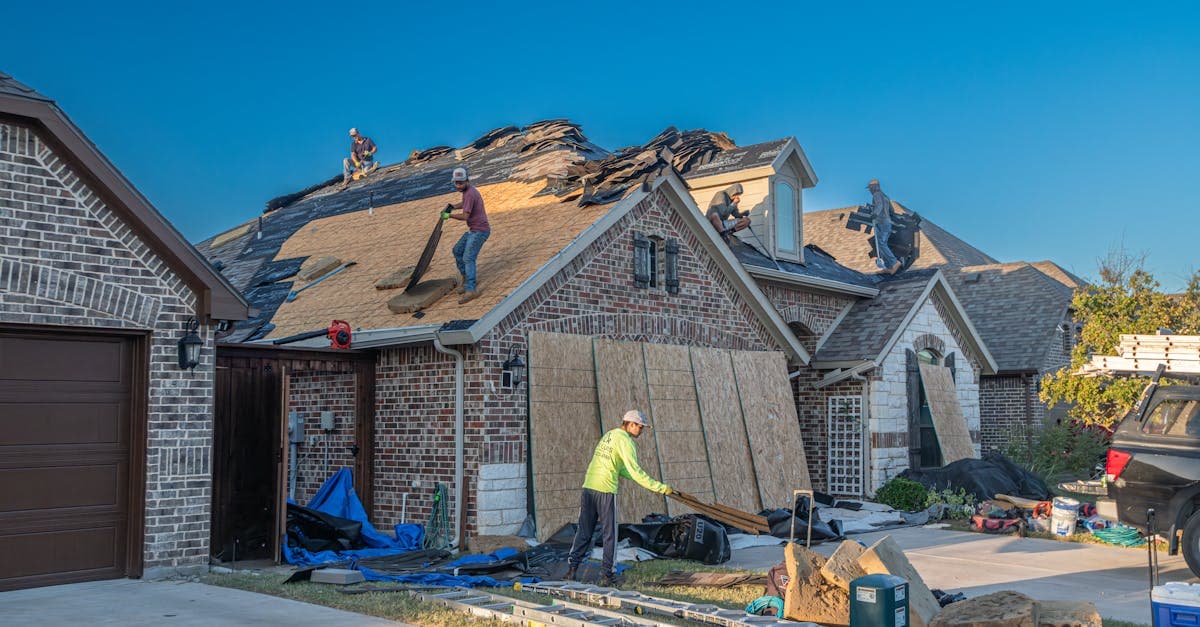
Insurance companies have a financial interest in underestimating your replacement cost. Every dollar your coverage limit is set below actual replacement cost saves the insurer money in potential claim payouts while still collecting premium on the coverage they do provide.
This is not a conspiracy — it is a structural incentive. Insurers use automated estimation tools that can miss custom features, undercount square footage, or lag behind rapidly changing construction costs. The result is that the majority of American homes are insured below their true replacement cost.
Your replacement cost is the forecast of what rebuilding would cost under today's conditions. It represents the actual dollars you would need to rebuild your home or replace your belongings at current prices. When your insurer's estimate falls short, the difference comes directly from your savings.
As a consumer, you have the right to challenge your insurer's replacement cost estimate, request an independent appraisal, and demand coverage that matches your actual exposure. You also have the responsibility to provide accurate information about your property, report renovations and improvements, and review your coverage annually.
The most powerful tool in your arsenal is knowledge. Understanding how replacement cost is calculated, what factors drive it up or down, and how it applies during a claim gives you the ability to advocate for adequate coverage. Passive policyholders who accept default estimates are the ones most likely to discover a devastating coverage gap after a loss. Informed policyholders who actively manage their replacement cost coverage are the ones who are truly protected.
Functional Replacement Cost: A Practical Alternative
But does this hold up under scrutiny? Functional replacement cost is a valuation approach that covers rebuilding with modern materials and methods that serve the same function as the original construction, rather than replicating the original materials exactly.
When functional RC applies: Functional replacement cost is most commonly used for older homes where exact replication of original materials would be prohibitively expensive or impractical. A home with plaster walls, hardwood trim, and slate roofing might cost $600,000 to replicate exactly but only $350,000 to rebuild with drywall, modern trim, and asphalt shingles that serve the same functional purpose.
How it differs from standard RC: Standard replacement cost covers rebuilding with materials of similar kind and quality. Functional RC covers rebuilding with materials that perform the same function. The distinction matters for homes with premium, obsolete, or specialty original materials.
Who uses functional RC: Some insurers offer functional replacement cost as the standard coverage for homes over a certain age — typically 40 to 75 years old. Others offer it as an option at a lower premium than full replacement cost.
Advantages: Functional RC premiums are typically 15 to 25 percent lower than full RC premiums for older homes. The coverage is adequate for policyholders who care about function over aesthetics and are comfortable with modern materials.
Disadvantages: Functional RC may not satisfy policyholders who value the historic character of their homes. Replacing plaster with drywall or slate with asphalt changes the look, feel, and character of the home, even if the functional performance is equivalent.
Historic home considerations: If your home is in a historic district that requires period-appropriate materials for exterior renovations, functional RC may not meet local requirements. In these cases, full replacement cost or historic home coverage is necessary.
Green Building and Replacement Cost
The claim is worth questioning. Some homeowners want to rebuild with environmentally sustainable materials and energy-efficient systems after a loss. Standard replacement cost coverage may not cover the higher costs of green construction.
The cost premium: Green building materials and systems typically cost 10 to 20 percent more than conventional alternatives. High-efficiency HVAC systems, solar panels, sustainable flooring, low-VOC paints, and enhanced insulation all carry price premiums that exceed the cost of standard replacement.
Standard RC limitations: Replacement cost coverage pays to replace with similar kind and quality materials. If your original home had standard materials, the insurer is not obligated to pay the premium for green upgrades — even if you prefer sustainable options.
Green building endorsements: Several insurers offer green building or green upgrade endorsements that cover the additional cost of rebuilding with environmentally certified materials and systems. These endorsements typically cover LEED-certified or ENERGY STAR-rated materials, high-efficiency HVAC and water heating, enhanced insulation beyond code requirements, sustainable flooring and finishes, and solar or wind energy systems.
Cost of the endorsement: Green building endorsements typically add 5 to 10 percent to the dwelling premium. The exact cost depends on the scope of coverage and the insurer.
Who benefits most: Homeowners who have already invested in green features should ensure their replacement cost coverage reflects the higher cost of these systems. Homeowners who want to upgrade to green materials after a loss need the endorsement to cover the cost difference.
Code considerations: As building codes increasingly require energy-efficient construction, the gap between standard and green building costs is narrowing. Ordinance or law coverage may cover some energy efficiency upgrades that are now code-required, reducing the need for a separate green building endorsement.
How Climate Change Is Increasing Replacement Costs
Not everyone agrees, and for good reason. Climate change is driving replacement costs higher through increased disaster frequency, more stringent building codes, and higher demand for construction resources.
More frequent severe events: As climate patterns shift, the frequency of hurricanes, wildfires, severe storms, and flooding events is increasing. Each major event triggers demand surge in the affected region, driving up material and labor costs. These surges are becoming more frequent and affecting more regions.
Stricter building codes: In response to climate-driven risks, jurisdictions are tightening building codes. Florida's post-hurricane code requirements, California's wildfire-resistant construction standards, and updated wind and flood zone designations all add cost to construction. Rebuilding to these enhanced codes costs 15 to 30 percent more than pre-update standards.
Material and design changes: Climate-resilient construction — impact-resistant windows, reinforced roofing, elevated foundations, fire-resistant siding — costs more than standard materials. As these features become code requirements, they become embedded in replacement costs.
Insurance market response: Insurers are recalibrating replacement cost estimates to reflect climate-driven cost increases. Some are also raising premiums, tightening underwriting criteria, or withdrawing from high-risk markets entirely, reducing coverage options for homeowners in climate-vulnerable areas.
What homeowners should do: Review your replacement cost coverage in the context of current climate risks and building code requirements in your area. Ensure your limits reflect the cost of climate-resilient construction, not pre-update estimates. Consider extended replacement cost coverage to buffer against unexpected cost increases.
Long-term planning: Climate change effects on replacement costs are accelerating. Annual coverage reviews are more important than ever. Homeowners in climate-vulnerable areas should be particularly proactive about maintaining adequate coverage and exploring supplemental policies for flood, wind, and wildfire.
Extended Replacement Cost Coverage
But does this hold up under scrutiny? Extended replacement cost coverage provides a buffer above your dwelling coverage limit, typically paying 125 to 150 percent of the stated limit if actual rebuilding costs exceed the limit. This endorsement protects against cost overruns that are beyond your control.
How it works: If your dwelling coverage limit is $300,000 and you have a 25 percent extended replacement cost endorsement, the insurer will pay up to $375,000 to rebuild your home. This additional $75,000 buffer protects against unexpected cost increases during reconstruction.
When it matters most: Extended replacement cost is most valuable after widespread disasters when demand surge drives up construction costs. After a hurricane or wildfire that destroys hundreds of homes simultaneously, contractors, materials, and labor become scarce. Prices spike 20 to 50 percent or more above normal levels. Standard replacement cost coverage at the stated limit may fall short.
Typical endorsement levels: Most insurers offer extended replacement cost at 125 percent or 150 percent of the dwelling limit. The cost is typically modest — $50 to $200 per year depending on your base premium and the extension percentage.
Differences from guaranteed replacement cost: Extended replacement cost has a cap — 125 or 150 percent. Guaranteed replacement cost has no cap and pays whatever it costs to rebuild, regardless of the amount. Guaranteed RC is rare and typically available only for high-value homes through specialty insurers.
Who should consider it: Every homeowner should strongly consider extended replacement cost coverage. The endorsement is affordable, and the scenarios it protects against — post-disaster cost surges, unexpected code requirements, material price spikes — are both common and financially significant.
Limitations: Extended RC still has a ceiling. In extreme post-disaster scenarios, costs can exceed even 150 percent of the estimated replacement cost. However, the buffer it provides covers the vast majority of cost overrun situations.
Building Code Changes and Replacement Cost
The claim is worth questioning. When you rebuild after a loss, you must comply with current building codes — not the codes that were in effect when your home was originally built. Code-required upgrades can add significant cost beyond your standard replacement cost estimate.
The code compliance gap: Building codes evolve continuously. A home built 20 years ago was designed to the codes of that era. When rebuilt, it must meet current codes, which may require enhanced hurricane straps, improved insulation, updated electrical panels, arc-fault circuit interrupters, upgraded plumbing, fire-rated materials, and accessibility features.
The cost impact: Code-required upgrades can add 10 to 25 percent to the cost of rebuilding, depending on the age of the original structure and the extent of code changes. On a $300,000 rebuild, that is $30,000 to $75,000 in additional costs.
Standard replacement cost does not cover code upgrades: Most standard replacement cost provisions cover rebuilding to the pre-loss condition — not to current code requirements. The cost of mandated upgrades falls outside the standard coverage.
Ordinance or law coverage: This endorsement specifically covers the additional cost of complying with current building codes during reconstruction. It typically includes three components: coverage for the cost of demolishing the undamaged portion of a building required by code, coverage for the increased cost of rebuilding to current codes, and coverage for the loss of the undamaged portion.
How much ordinance coverage to carry: Most insurers offer ordinance or law coverage at 10, 25, or 50 percent of your dwelling limit. For older homes in jurisdictions with significantly updated codes, 25 percent or more is recommended.
A real example: After a fire in a 1960s home, the local building department required the entire electrical system to be upgraded to current code, even though only the kitchen was damaged. The upgrade cost $15,000 — covered by the homeowner's ordinance or law endorsement but not by the standard dwelling coverage.
Replacement Cost in Auto Insurance
Not everyone agrees, and for good reason. Auto insurance traditionally uses actual cash value to settle total loss claims, but some insurers now offer replacement cost or new car replacement endorsements that can significantly increase your payout.
Standard auto total loss settlement: When your vehicle is totaled, the insurer pays its actual cash value — essentially the fair market value of the vehicle immediately before the loss. For a three-year-old car that cost $35,000 new, the ACV might be $22,000, leaving a $13,000 gap between what you receive and what it costs to buy the same car new.
New car replacement coverage: This endorsement pays to replace your totaled vehicle with a brand-new model of the same make and model, rather than paying ACV. It is typically available for vehicles that are less than two to three years old and have fewer than a specified mileage limit.
Better car replacement: Some insurers offer a middle ground that pays to replace your totaled vehicle with one that is one or two model years newer, with lower mileage. This option costs less than new car replacement while still providing more than ACV.
Gap insurance: While not technically replacement cost, gap insurance covers the difference between your car's ACV and the outstanding loan or lease balance. This protects you from owing money on a vehicle you no longer have.
Cost: New car replacement endorsements typically add $20 to $50 per year to your auto premium. Gap insurance costs $20 to $40 per year through your auto insurer, or it can be purchased through your dealer at a higher cost.
When these endorsements make sense: New car replacement is most valuable during the first two to three years of ownership, when depreciation is steepest. After that, the gap between ACV and new car price narrows. Gap insurance is essential whenever your loan balance exceeds your vehicle's ACV — common with low down payments or long loan terms.
Quick Takeaways on Replacement Cost
If you remember five things from this guide, make them these:
One: Replacement cost is the amount needed to replace or rebuild your property at current prices without deducting depreciation. It is the standard for dwelling coverage and should be the standard for your personal property too.
Two: Replacement cost and market value are different numbers. Your coverage limit should be based on replacement cost — the cost to rebuild the structure — not what the home would sell for.
Three: Most replacement cost policies pay in two steps: actual cash value first, then recoverable depreciation after you complete repairs. Know the time limit for claiming recoverable depreciation.
Four: Construction costs have increased dramatically in recent years. If you have not reviewed your replacement cost estimate recently, your coverage limit may be significantly inadequate.
Five: Extended replacement cost, ordinance or law coverage, and replacement cost for personal property are three endorsements that dramatically strengthen your protection for a modest additional premium.
Review your replacement cost coverage today. The effort is minimal. The protection is substantial.
Continue reading

How to Read an Insurance Quote Like a Professional
Insurance quotes contain dense information that most consumers skim past. Learning to read every section of a quote — from coverage summaries to endorsement schedules — reveals the true quality of each offer.

Policy Checkup After Buying a Home: Getting Your Coverage Right
Homeownership brings dwelling coverage, personal property protection, liability limits, and flood risk questions. A thorough policy checkup when you buy a home prevents costly coverage mistakes.

Why Insurance Companies Oppose Assignment of Benefits Agreements
Insurers argue that AOB drives up claim costs, encourages litigation, and inflates repair bills. Understanding the insurer perspective helps you evaluate whether an AOB serves your interests.